
When choosing the perfect lighting for our child’s room, we may have doubts about which is the best option.
Lighting influences how children play, rest, and feel in their own space. That’s why, when it comes time to decorate or renovate a bedroom, a very common question arises: is a ceiling lamp, a table lamp, or a wall lamp better?
There isn’t a single answer, because each type serves a different purpose. Understanding how each type of lighting is used will help you create a balanced, practical, and inviting atmosphere.
The ceiling lamp, the foundation of all lighting
The ceiling light is the starting point. Its main function is to provide general lighting that allows you to see the entire room clearly.
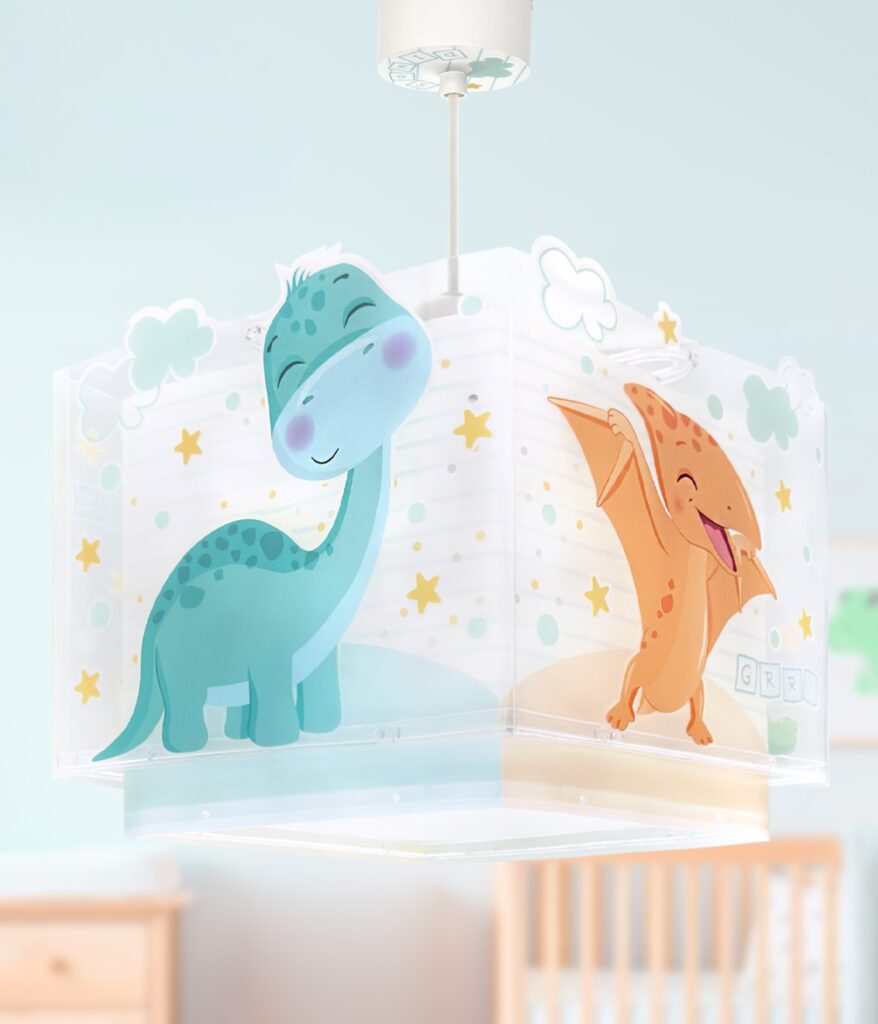
It is especially important in children’s spaces because children use the bedroom for many activities: playing, getting dressed, reading, or picking up toys.
Uniform lighting prevents uncomfortable shadows and improves safety when moving around.
When choosing a children’s ceiling light, it’s advisable to look for:
- Warm or neutral light that is pleasing to the eyes.
- Diffusers that soften the shine.
- Cheerful designs that are part of the decoration.
In addition, a good central lamp can become a key decorative element that reinforces the theme of the room, from natural motifs to fantasy worlds.
The table lamp, light for quiet moments
Table lamps provide more focused and intimate lighting. They are ideal for activities that require concentration or calm, such as reading bedtime stories, drawing, or doing crafts.
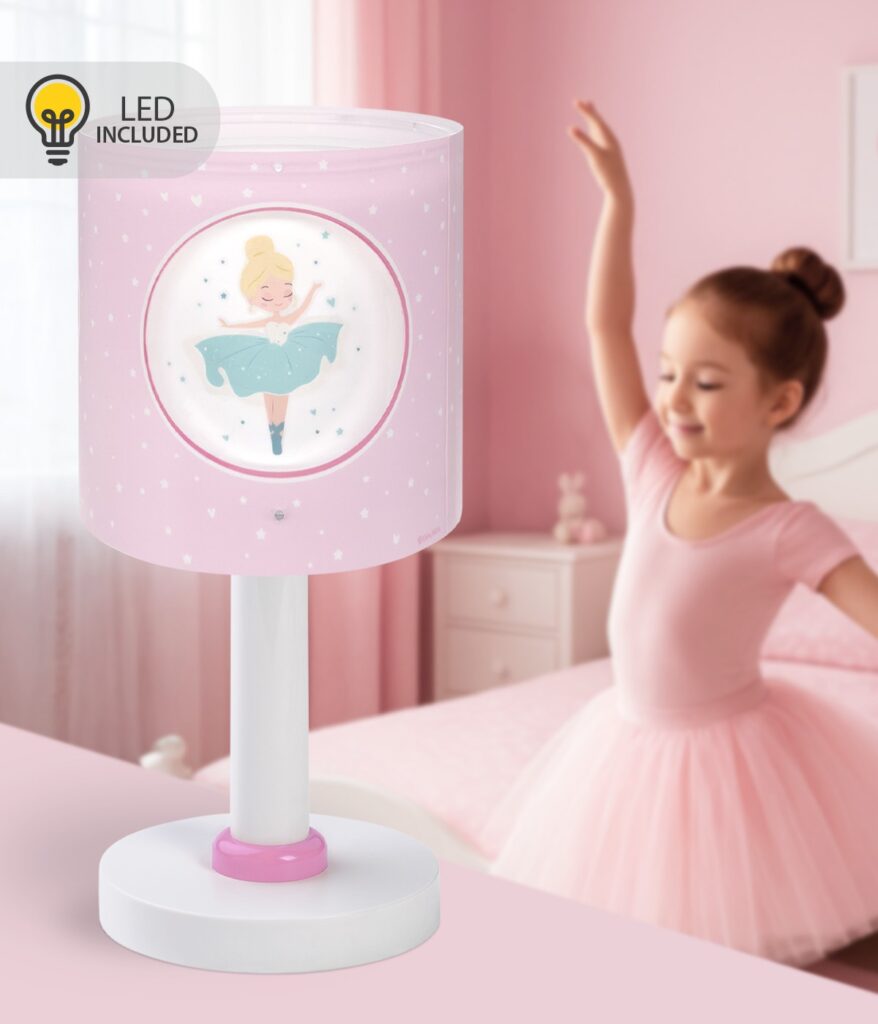
They also help create a more relaxed atmosphere at the end of the day. When the main light is turned off and only soft lighting remains, the child’s brain interprets this as a sign that it’s time to rest.
This type of lamp works very well:
- On bedside tables.
- On children’s desks.
- In reading nooks.
An important tip is to choose stable, sturdy models made with safe materials, as they will be within reach of small children.
Wall lights, safety and nighttime comfort
Wall lamps serve a very special function in a child’s bedroom. They not only provide light, but also help create a sense of security.
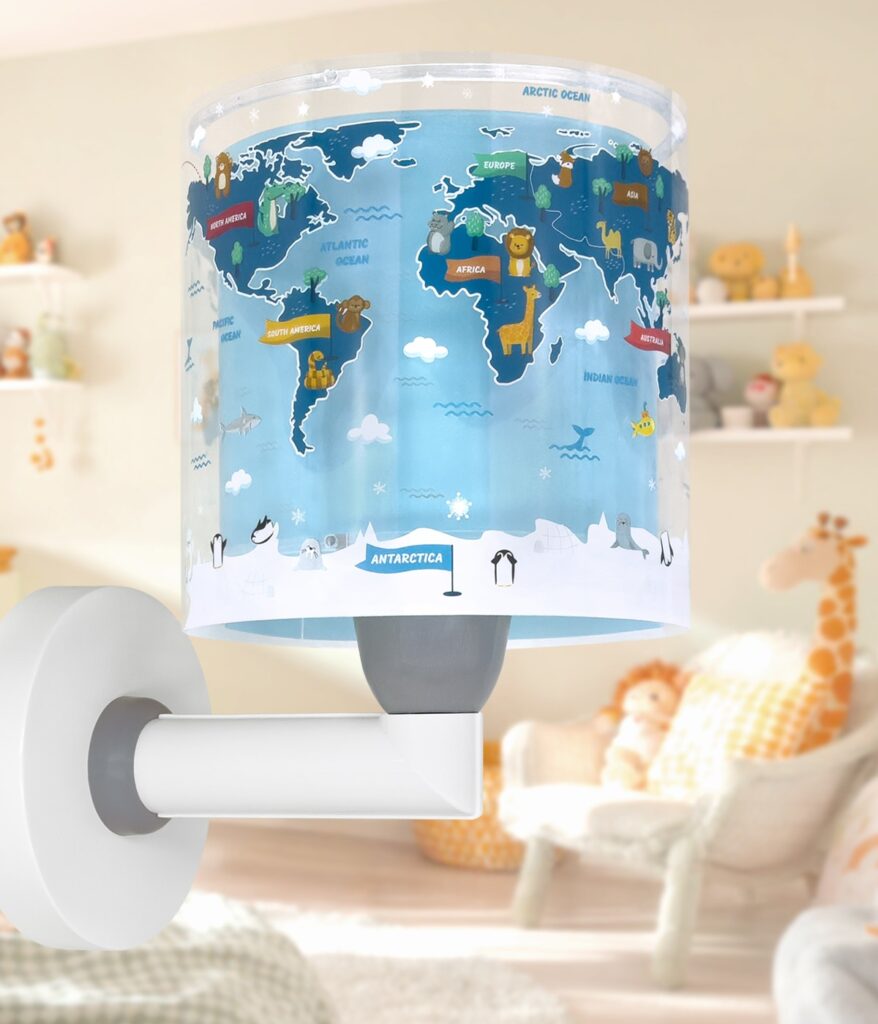
They are perfect as nightlights or nightlights, especially for children who are starting to sleep alone. A soft glow prevents total darkness without disrupting sleep.
Among its advantages are:
- They don’t take up space in furniture.
- They reduce the risk of falls or bumps.
- They create welcoming and immersive environments.
Placed near the bed or in passageways, they allow you to get up at night without turning on a bright light that completely wakes the child.
The best option is to combine all three.
Although many families seek to choose only one type of lamp, ideally children’s lighting should be thought of as a set of layers.
A balanced combination usually includes:
- General lighting (ceiling) for everyday use.
- Functional light (table) for specific activities.
- Ambient light (wall) for night and moments of calm.
This mix allows the room to be adapted to each moment of the day, naturally accompanying children’s routines.
Final keys to success
Before deciding, think about how the child uses their room and how their needs will evolve over time.
Good lighting not only decorates, it also promotes rest, autonomy and emotional well-being.
Choosing the right ceiling, table, or wall lamps is not about picking a single option, but about creating a luminous environment that grows with them.
Because, in the end, a well-lit room not only looks better, it’s a better place to live.